June 5, 2025 — Springdale, UT
The Zion Human History Museum has unveiled a striking new temporary exhibit, offering visitors a chance to travel 200 million years into the past—to a time of volcanoes, climate upheaval, and one of Earth’s largest mass extinction events.
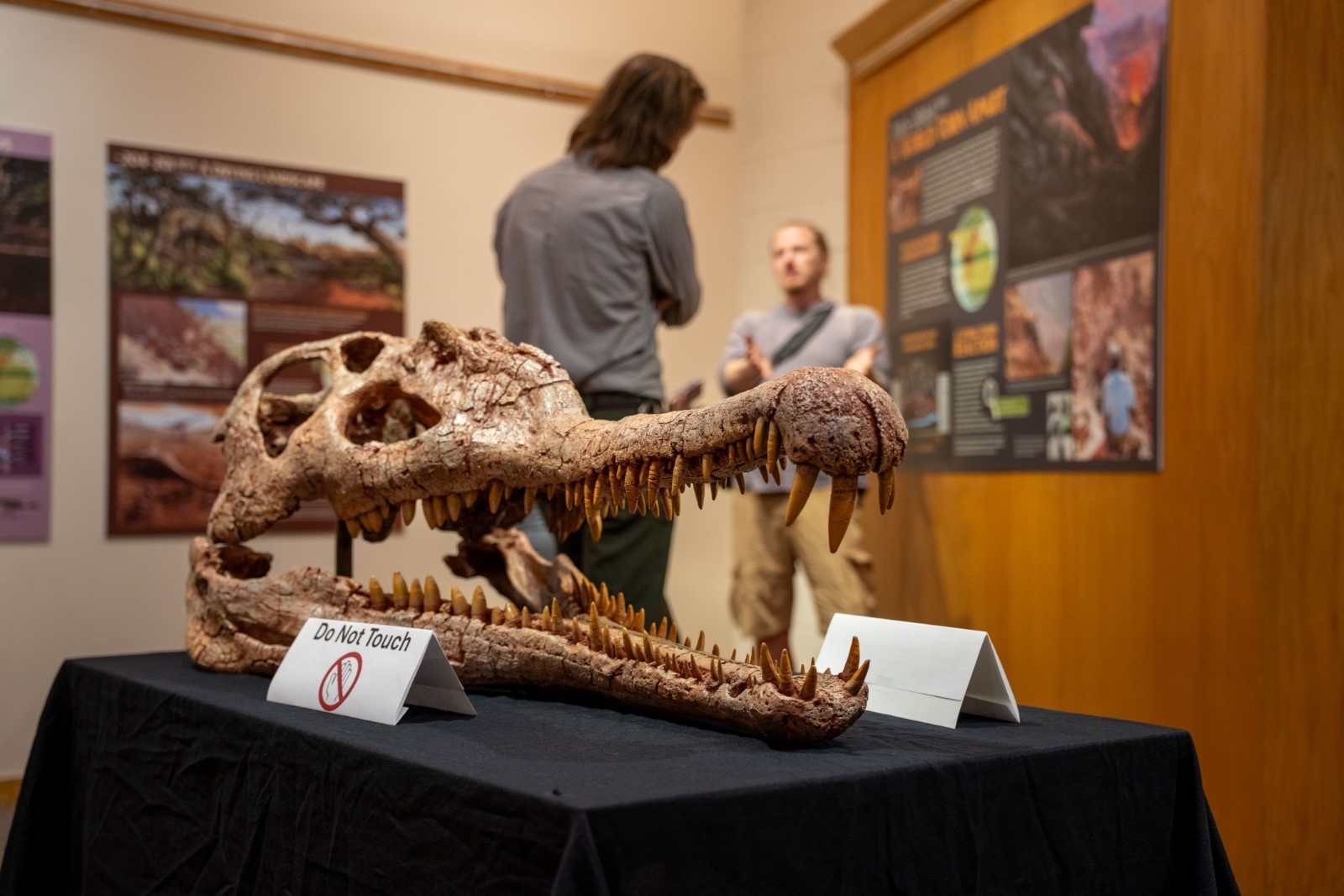
Titled “End Triassic Extinction,” the exhibit examines the pivotal transition from the Triassic to Jurassic period (227–180 million years ago), highlighting original research conducted inside Zion National Park. A model phytosaur skull and geological displays allow guests to get up close with prehistoric evidence uncovered right here in Southern Utah.
The exhibit centers on the work of Dr. Celina Suarez, a geoscience professor at the University of Arkansas, who led a seven-year project analyzing Zion’s Moenave Formation. Her team discovered a significant spike in CO₂ levels—evidence of intense volcanic activity tied to the breakup of the supercontinent Pangea. This same CO₂ surge, they found, contributed to the global wildfires and erratic climate patterns that wiped out around 80% of all marine and terrestrial species on Earth.
“We’ve got to look at the geologic past and all these past events to understand where we’re going in the future,” Suarez said. “If we can just get one or two people that come and visit Zion to understand that… I’ve done my job.”
The exhibit is a collaborative effort supported by the Zion Forever Project, St. George Dinosaur Discovery Site, Utah Geological Survey, and the National Science Foundation. Each organization brought expertise to a topic that continues to shape global conversations around extinction, evolution, and climate change.
“None of us could have done anything to this scale by ourselves,” said Zion Physical Scientist Robyn Henderek. “We all had a role to play in this process.”
Visitors can view the End Triassic Extinction exhibit daily at the Zion Human History Museum, open from 9 AM to 6 PM during the summer. Check current hours before you go.