

Location: The southwest corner of Utah, about 20 miles southwest of Ivins.
Difficulty: Easy with no steep sections or large obstacles.
Average Hiking Time: About two hours at a leisurely pace with many photo stops.
Family Friendly: Yes
Finding the Trailhead: From St. George go north on Bluff Street (State Highway 18) and turn left (west) onto Sunset Boulevard (aka Highway 8). Continue west on Sunset Boulevard, named Santa Clara Drive in Santa Clara, and it magically becomes Old Highway 91 in Ivins. At 10.9 miles from the Bluff Street intersection Old Highway 91 splits into two, take the left fork (south) on Old Highway 91 as it winds through the Beaver Dam Mountains. At 11.8 miles from the Old Highway 91 split—and just past a large rock outcropping, Castle Cliff on the left—is the intersection with the signed Lytle Ranch Road (also called Eardley Road). Turn right (west) onto the good dirt road. Stay on the main road through low hills and scenic desert landscape, a veritable Joshua Tree forest on both sides of the road. Along the way are a few road signs to guide you to the Preserve. After a final crest in the hills, the road descends into a green valley. At 10.2 miles from the Old Highway 91 turnoff, go right (north) at the signed Lytle Ranch Preserve Road. Follow the signs for .2 mile to reach the Preserve’s parking area.
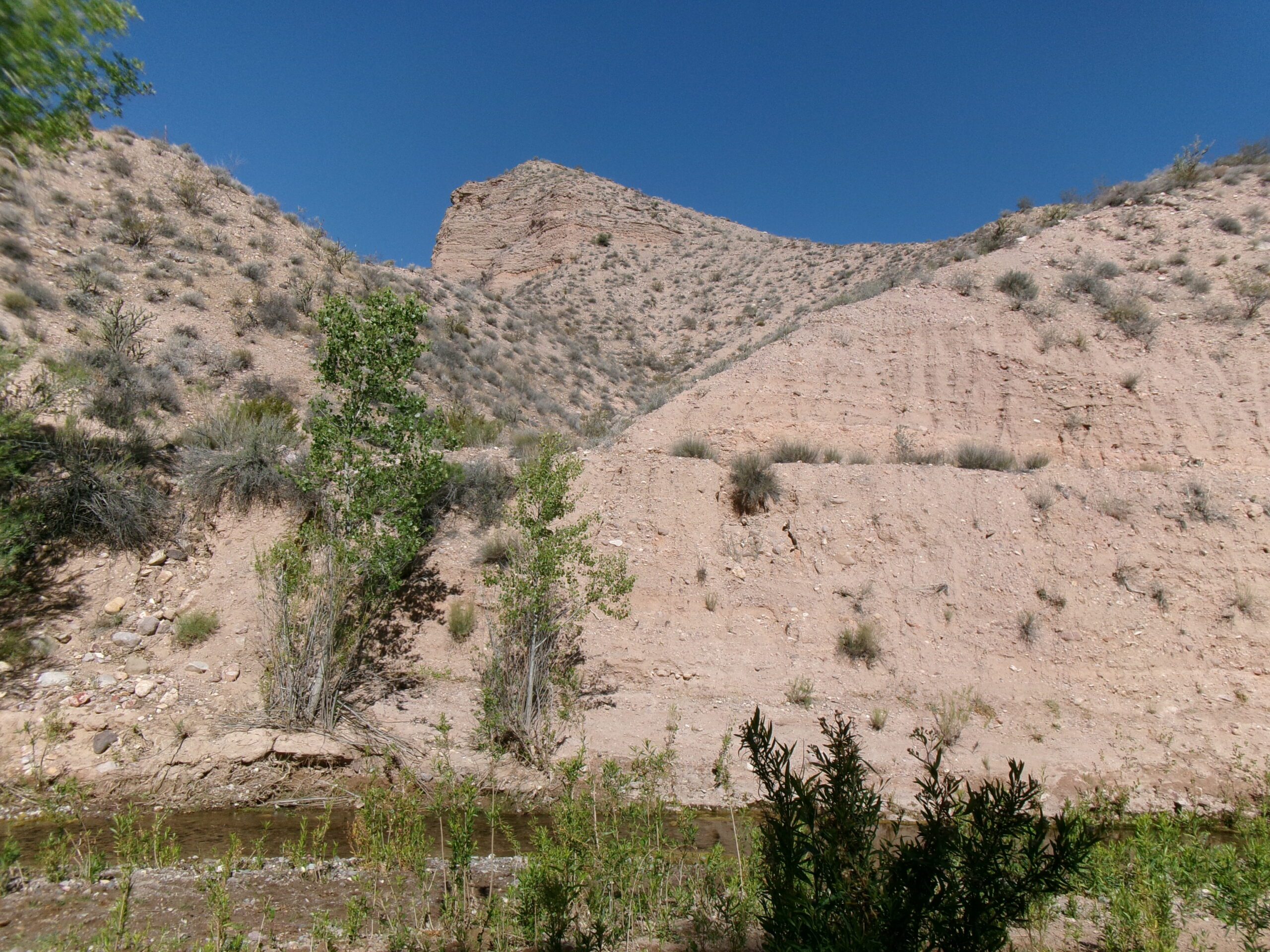
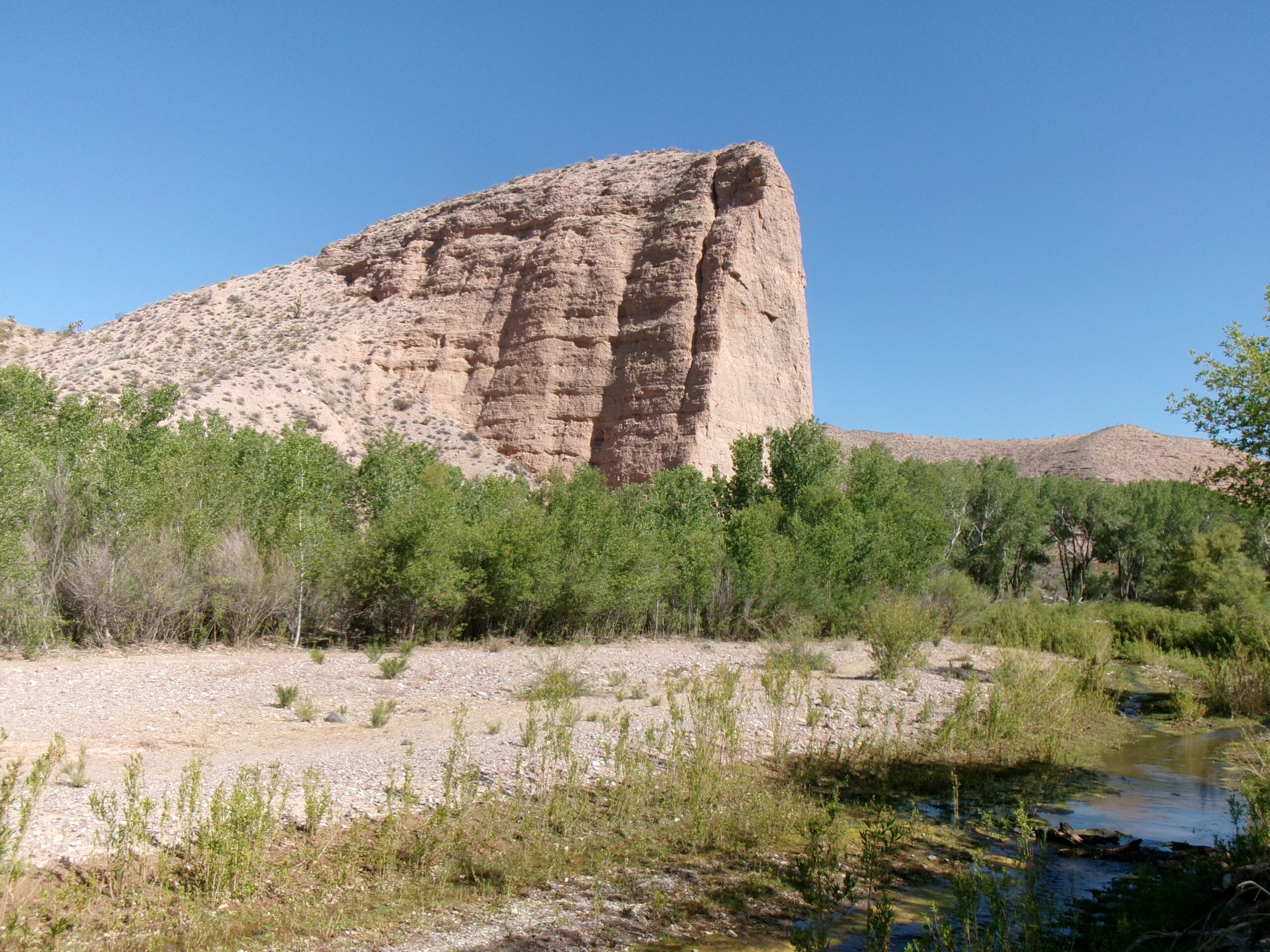
Yearning for a bit off the beaten path adventure near the Utah-Nevada border in an idyllic southwest desert setting featuring a natural oasis, Joshua Tree forest, great mountain views, biological diversity, and the Beaver Dam Wash? If yes, then you are a prime candidate for an outing to the 600 acre Lytle Nature Preserve.
The region now included within the Lytle Nature Preserve was originally settled by pioneers Dudley and Mary Leavitt in the 1870s. The property stayed in the family until 1928 when a portion was sold to John Eardley. Eardley and his wife and six children improved the land by building a ranch house, reservoir, fences, and ditches. They raised alfalfa, sorghum, melons, and various fruits.
In 1952 Talmage and Eleanor Marie Lytle purchased the ranch/farm from the Eardleys. They ran the ranch from 1956 to 1985 without electricity, telephones, or other utilities. Lighting, heating, and refrigeration were from propane.
In 1985 the Nature Conservancy purchased the property to preserve its natural and unique features and wildlife. The next year Brigham Young University acquired the property from the Nature Conservancy. They committed to keeping the 600 acre parcel as a nature preserve for education and research purposes. Since then, the Lytle Nature Preserve has been used by students, researchers, and other visitors interested in the diverse flora and fauna in this convergence of three ecosystems—the Mojave Desert, the Great Basin, and the Colorado Plateau.
The Lytle Nature Preserve is owned and operated by Brigham Young University. It is open to the public and there is no fee or permit for day use While day visits do not require reservations, do call the Preserve manager, Dallin Leota (801-422-1443), before your visit and go online to sign the required liability waiver. (You can scan the QR code at the Lyte Nature Preserve parking area to sign the waiver.). Overnight stays and camping are also available for a fee. If you plan to visit for the day or overnight, go to the Preserve’s webpage (https://lytle.byu.edu/) and review the “Visiting” section. We followed the instructions, called Dallin, and told him we planned to visit the Preserve.
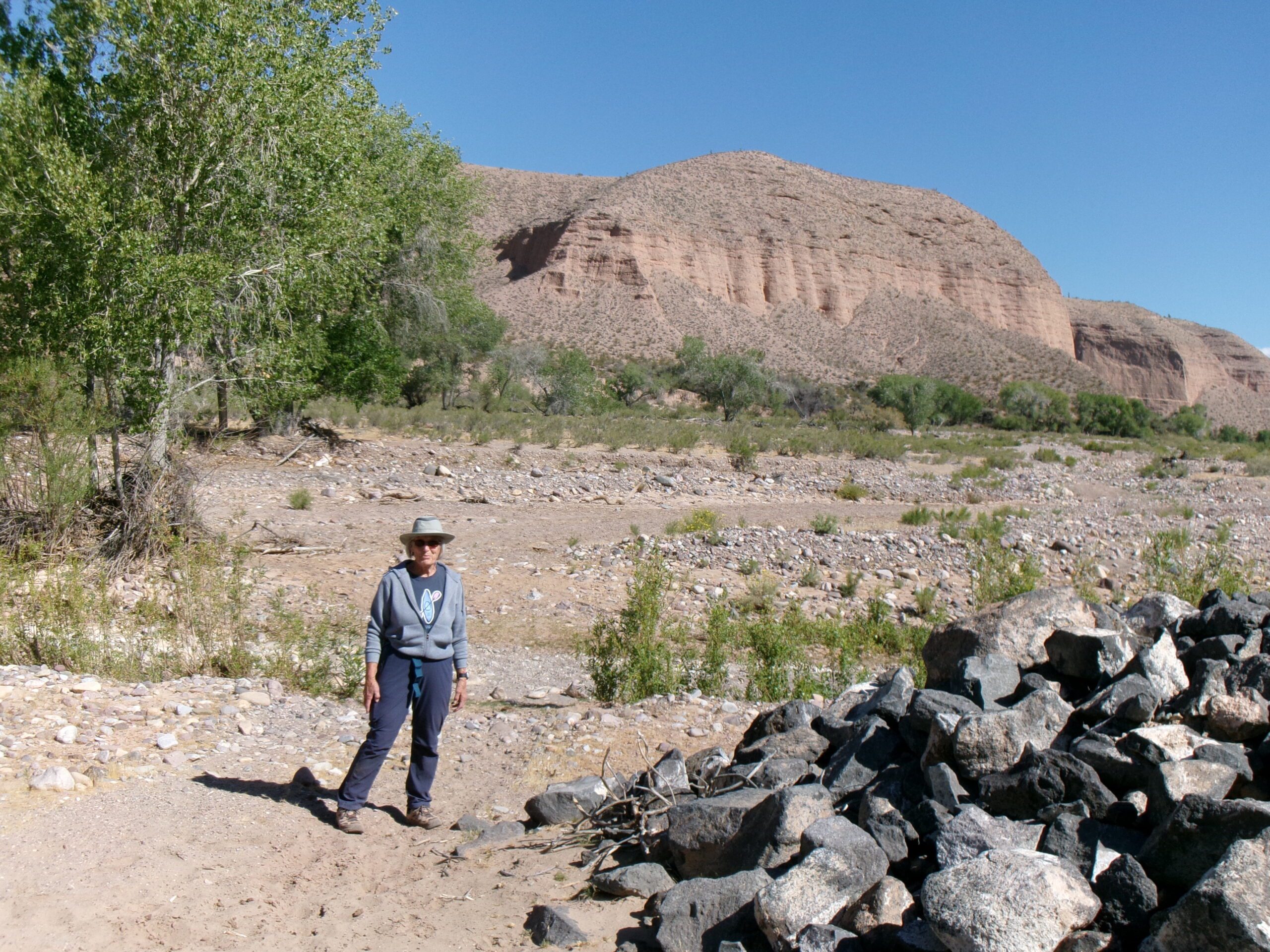
My wife, Deb, and I left St. George on a sunny late April weekday morning. We arrived at the Preserve parking area about 10 am with the temperature in the low 70s under a blue Utah sky with some puffy clouds. The Preserve manager Dallin Leota, and his two friendly dogs, met us at the parking area. A nice guy who answered our questions and suggested some areas to explore. There are no real hiking trails, just dirt roads and paths leading to all parts of the Preserve.
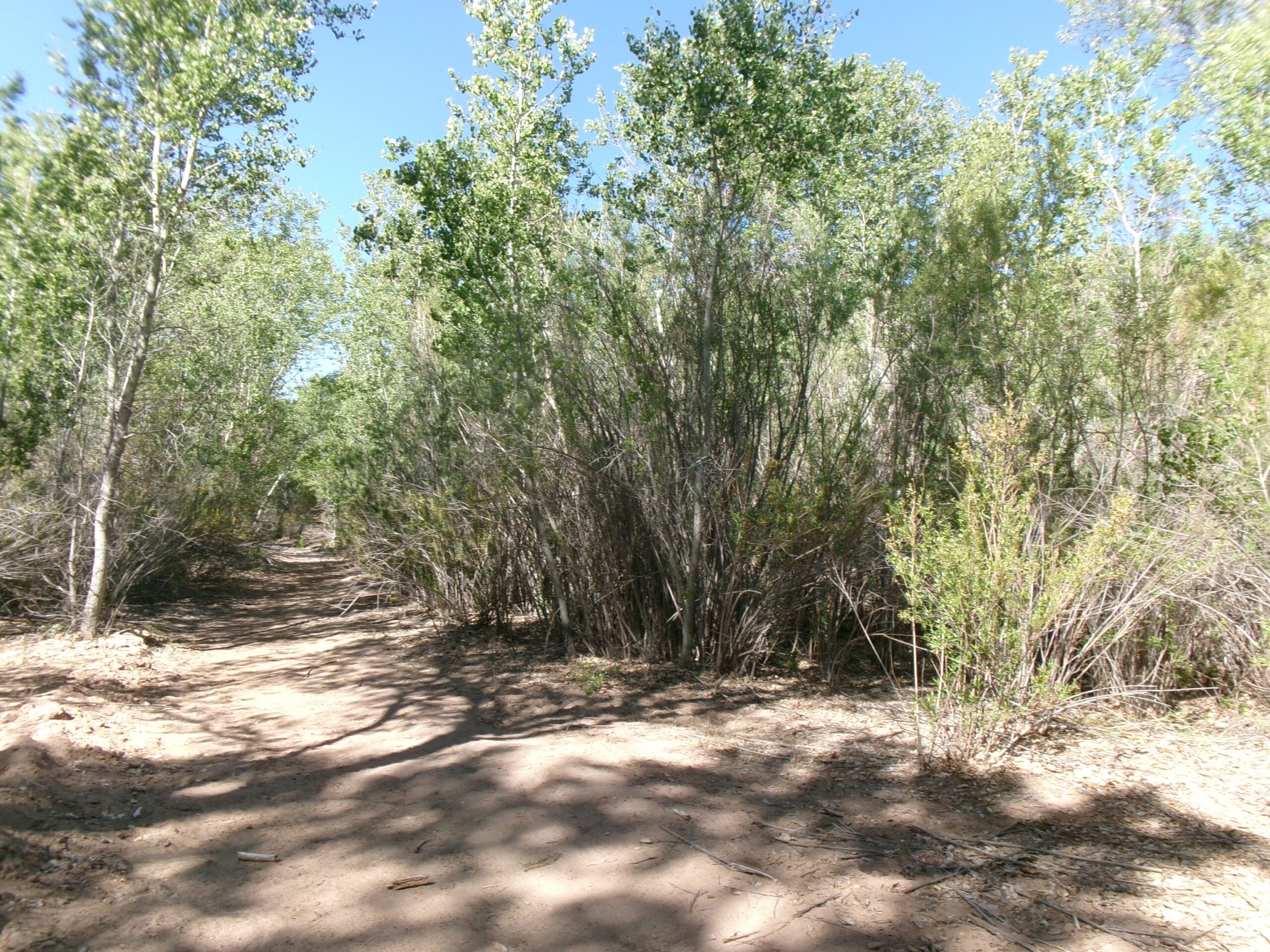
We began by opening a gate on the west side of the parking area to an old dirt road that led southwest to Beaver Dam Wash in about ¼ mile. After reaching the wash, we headed upstream (north) along the fairly wide stream in the wash under a canopy of large cottonwood trees. The path getting to and along the wash is rocky, watch your step. A year-round water source feeds the stream and provides water for the preserve. Along the wash are splendid views to the west of large mountains and cliffs.
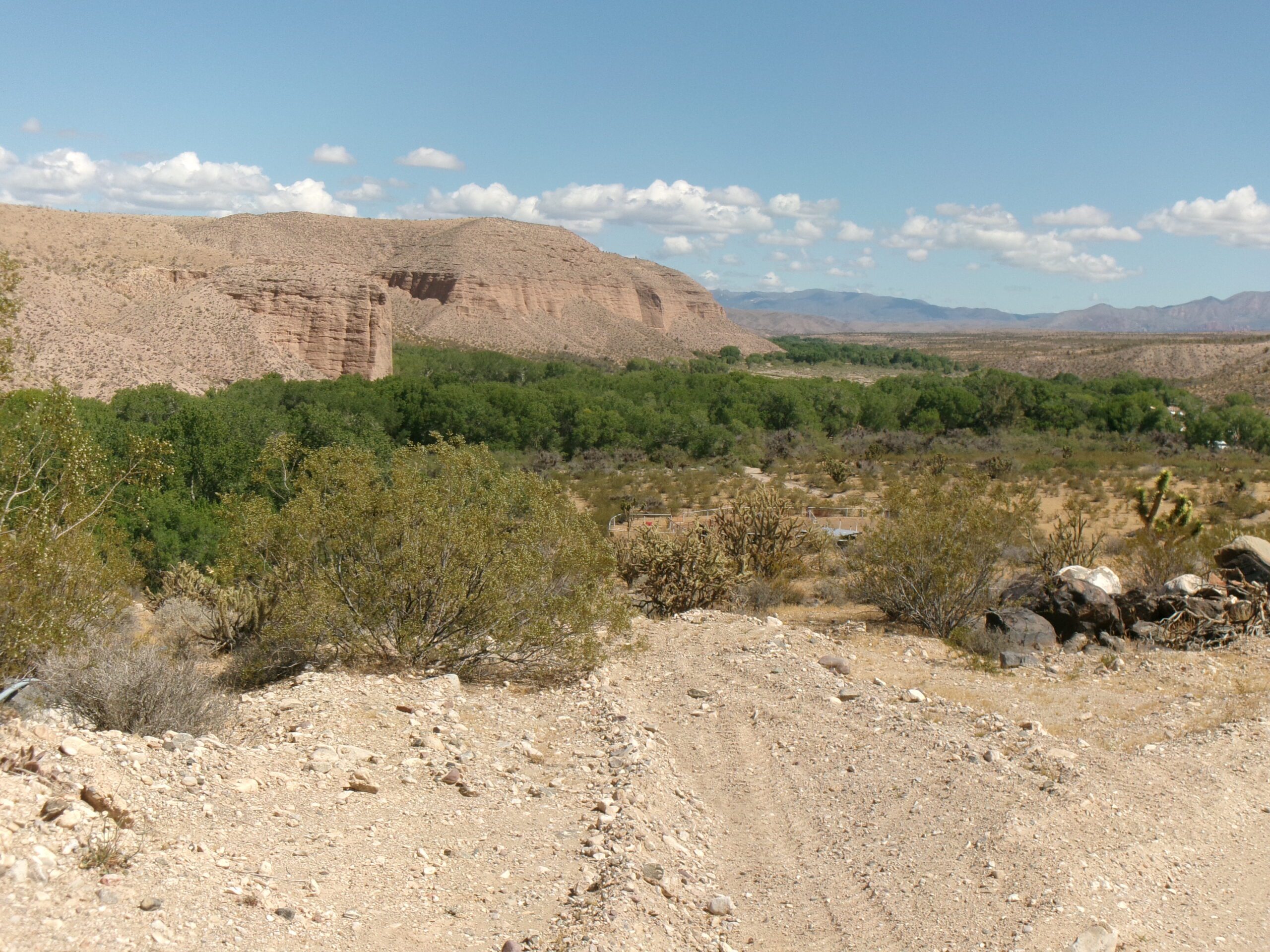
After about ¾ mile along the wash we hopped the fence at a convenient gate and headed east on one of the dirt roads. We quickly came to a huge pomegranate orchard with very large trees. Throughout the property are groves of pomegranate trees, fig trees, and mulberry and persimmon trees.
Our wandering brought us to lush vegetation, both native and planted, especially along Beaver Dam Wash. Diverse flora and fauna—trees, shrubs, and wildlife with the wash providing a year-round water source. Hillsides covered in Joshua Trees, yucca, and creosotes bushes.
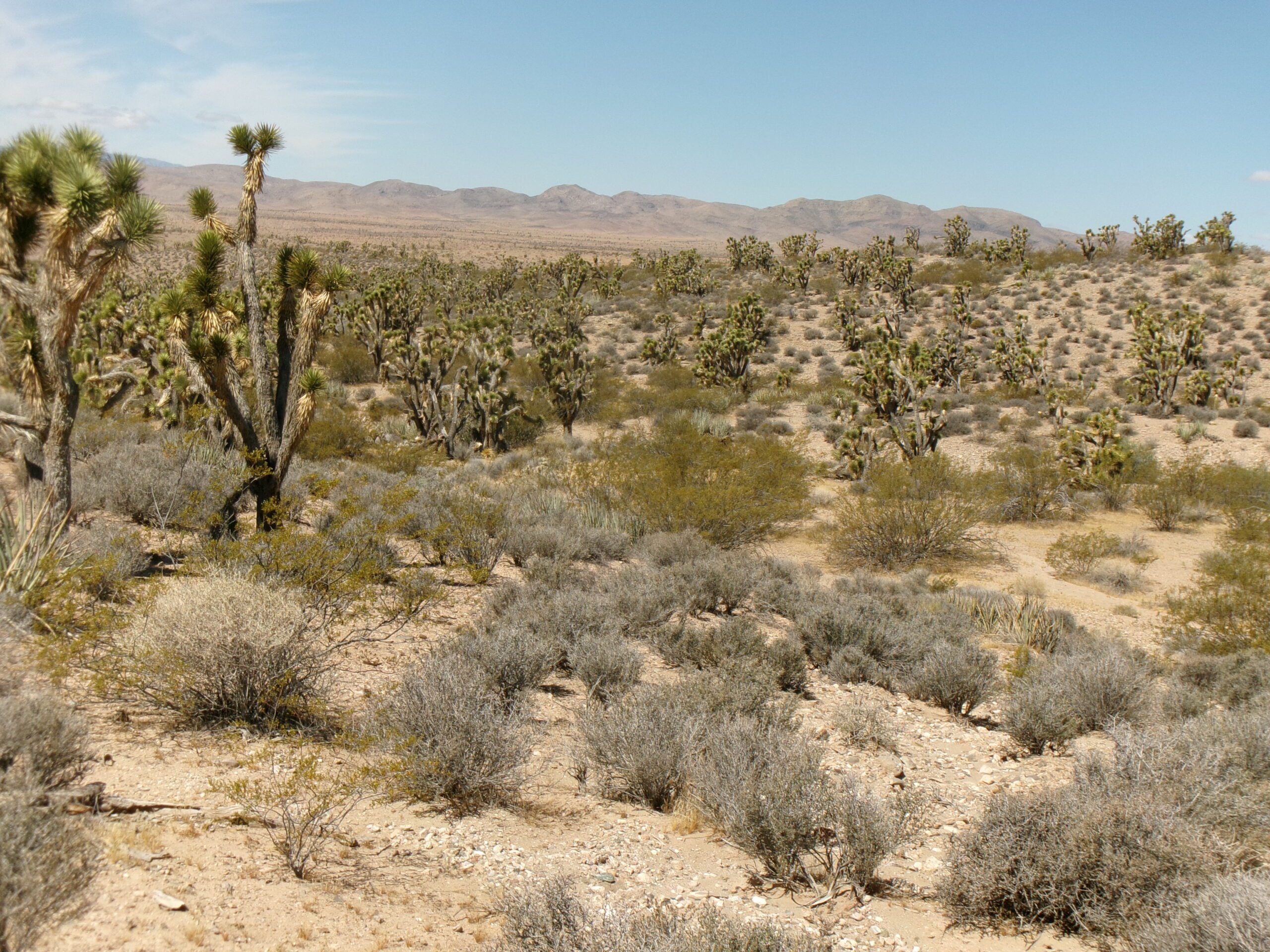
The Preserve is also a bird watchers paradise with scores of bird species in the area, including osta’s hummingbird, brown crested flycatcher, and roadrunners. We saw a few birds, some lizards, and one free roaming cow. You may also see desert tortoises, Gila monsters, coyotes, and deer among other desert residents.
We began our return journey to the parking area by heading south on one of the dirt roads. We arrived back at the parking area in less than two hours and having walked about two miles. We were in no hurry and stopped often to admire the scenery and take photos.
I highly recommend this hike. You get a feel for a true desert oasis. a Joshua Tree forest, magnificent mountain views, biological diversity, and the Beaver Dam Wash.



So interesting. Thank you for sharing this adventure. I look forward to more.